What a Weekly Pool Cleaning Visit Actually Covers
A weekly visit is six jobs done in a set order, and each one protects the next.
October 26, 2026 · 4 min read
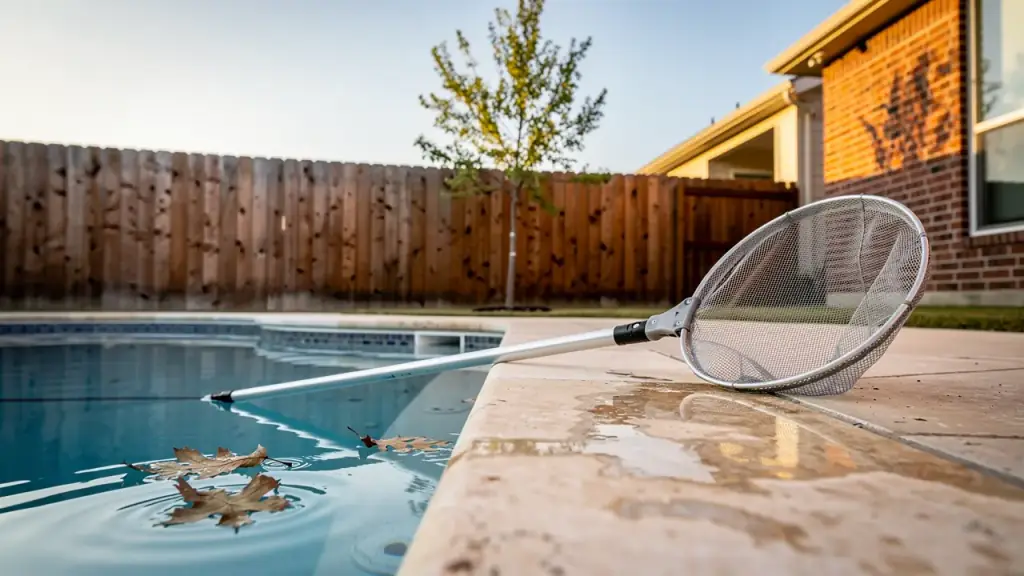
From the kitchen window, a weekly pool visit looks simple. Someone walks the deck with a pole, dips a brush, checks a gauge and leaves. What you can't see is the order of the work, and the order is the point. Each job sets up the next one, and when one gets skipped, a small problem has room to grow into a green one. Here are the six jobs on a weekly cleaning and what each one is protecting.
Skimming comes first
Leaves, pollen, bugs and the occasional lost toy float on the surface for a while before they sink. Skim them off first and you remove the material before anything stirs it into the water or pulls it toward the drain. In Dallas and Plano, where oaks and crepe myrtles drop something nearly every week, a pool can look clean at breakfast and cluttered by supper. Skimming also keeps the skimmer opening clear so water can travel across the top, which is where most floating debris wants to go. Skip it, and all that material ends up in the baskets and the filter instead, and the equipment pays for it.
A good skim is slow. Reach into the corners, run the net along the tile line, and lift the leaves that have started to sink just below the surface. Those are the ones that leave stains on the floor if they sit.
Brushing the walls, steps and tile line
Algae rarely starts in the middle of the pool where the water is moving. It starts on surfaces: behind the ladder, along a shaded step, in the corner of the shallow end. Brushing breaks up the thin film that algae and scale use to get a grip, and it throws that material back into the water where the filter can catch it. The walls get brushed, then the steps, then the tile line, and the stroke always pushes debris toward the main drain. A brush is cheap prevention. A pool that goes weeks without one grows a film you can feel with your hand, and by then you're fighting it with chemicals instead of bristles.
Vacuuming the floor and removing debris
Whatever sinks ends up on the floor, and the floor is where it breaks down. Leaves release tannins that tint the water and stain plaster. Pollen settles in a yellow layer after spring. Dirt blows in from the yard and feeds anything that wants to grow. Vacuuming pulls that load out of the pool instead of leaving it to dissolve. Heavier debris like acorns, twigs and wet leaf mats comes out by hand first, so it doesn't choke the hose or lodge in the pump.
Debris removal also means emptying the skimmer basket and the pump basket. Those two baskets are the first line of protection for your pump. When they fill up, the pump has to work harder to move the same water, the motor runs hotter, and the flow across the pool drops. Weak flow is exactly what lets algae settle into the dead spots.
Filter maintenance
The filter does the fine work. It catches what the baskets miss: silt, dust, dead algae, the haze that makes water look dull. As it loads up, pressure climbs on the gauge and flow drops. On each visit the tech reads that gauge and services the filter as its type requires, whether that means backwashing, rinsing cartridges or something else. A filter that is overdue can't do its job, and the water goes hazy even when the chemistry is fine. A rising pressure reading also points you toward the real cause, such as a clogged basket or a valve that's partly closed.
The equipment check
The last job is a walk around the equipment pad. Does the pump sound the way it did last week? Is anything dripping at the unions, the lid or the heater? Does the gauge read about where it should? This takes a few minutes, and it catches the quiet failures: a weeping seal, a pump starting to hum, a fitting working loose. Those are cheap to fix early and a headache after they've flooded a pad or burned out a motor. If you want to know what a failing pump sounds like, we wrote that up in another article on this blog.
Why weekly beats waiting until it looks bad
Algae and scale start before you can see them. In North Texas heat, a pool can slide from clear to cloudy in a few days, and once it's visibly green you're paying in time and chemicals to undo what a brush and a basket would have prevented. Weekly service keeps small problems small. It also gives someone who knows your equipment a regular look at it, so a change in sound or pressure gets noticed instead of ignored for a month.
Dallas Pool Service & Repair offers weekly pool cleaning for homes in Dallas, Plano, Allen, Frisco, McKinney and surrounding communities, and it covers all six jobs above. For a free quote, call (214) 850-3818 or email look@dpoolservice.com.
Dallas Pool Service & Repair, (214) 850-3818
Call (214) 850-3818