pH, Alkalinity and Sanitizer in Plain English
Three readings run your pool's water, and the order you fix them in matters.
October 26, 2026 · 4 min read
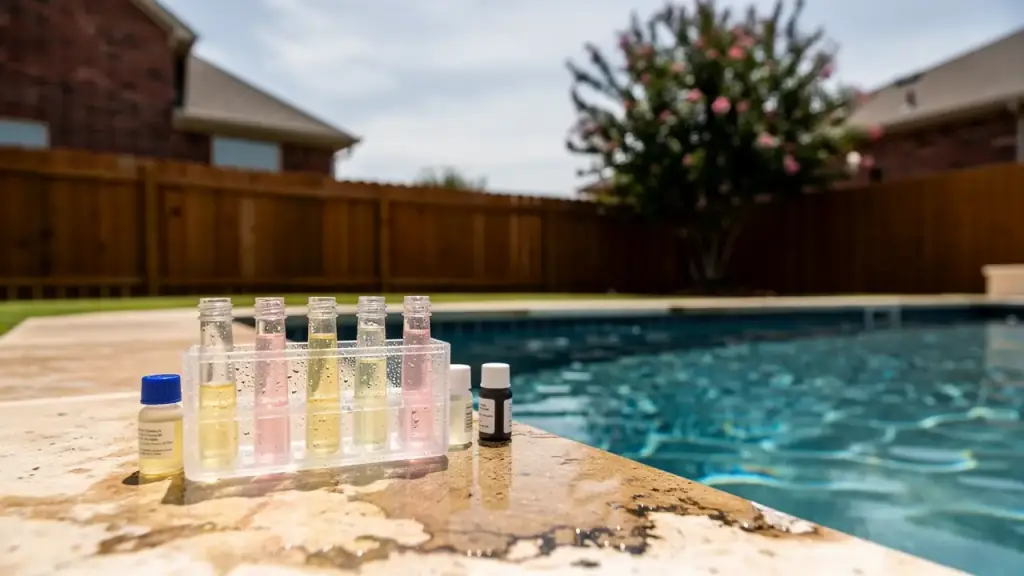
Pool chemistry sounds like a chemistry class, and most owners would rather skip it. You don't need to run the numbers yourself, but knowing what the three main readings mean makes a service visit make sense. It also explains why a tech tests the water every time, even when it looks perfect.
Sanitizer is the part that does the killing
Sanitizer, usually chlorine in a backyard pool, is what keeps algae and bacteria from growing in warm water. It's used up as it works. Sunlight breaks it down, swimmers use it up, and rain and leaves drain it. That means the level moves every week, not just when something goes wrong. Too little and the water turns cloudy or green. Too much and swimmers get red eyes and dry skin. The sharp smell people blame on chlorine is often a sign of too little, not too much.
Sunlight is the biggest drain in a Dallas summer, which is why many pools use a stabilizer to slow the loss. But more isn't better there either. The goal is steady sanitizer that is still present on Thursday, not a big dose on Monday that is gone by the weekend.
pH tells you how well sanitizer can work
pH is a measure of how acidic or basic the water is. It matters for two reasons. First, sanitizer works well in a narrow band and loses strength when pH drifts too high. Second, pH decides how the water treats your skin, your eyes and your pool. Water that runs low can irritate swimmers and eat at metal parts and grout. Water that runs high leaves scale on the tile and inside the equipment, and it clouds up. A test kit gives you a reading, and the technician compares it to the range the kit calls normal.
Alkalinity is the buffer behind pH
Total alkalinity is a measure of how much the water resists pH swings. Think of it as the shock absorber. When alkalinity is where it should be, pH stays put through rain, heavy swimming and the usual additions. When alkalinity is low, pH bounces around and you chase it all week. When it runs high, pH tends to creep up and stay there. Alkalinity changes slowly, which is why it's the steady reference point for the other two readings.
Why the order is alkalinity, then pH, then sanitizer
The sequence matters because the three affect each other. Adjusting alkalinity first sets the buffer, so pH stays where you put it. Adjusting pH second means you're correcting it against a stable base, instead of watching it slide again an hour later. Sanitizer comes last because how well it works depends on pH. Add sanitizer to water with off pH and some of it is wasted. Add it after pH is right and each dose does its job. Then the water is tested again, because adding one chemical changes more than one number.
A common mistake is to fix the number that looks worst and move on. Dumping sanitizer into water with a high pH, or adding acid to water with low alkalinity, can leave you chasing the same problem for days. Working in order means each adjustment holds, and the pool stays steady between visits instead of swinging back the moment the sun comes out.
Why it's tested every visit
A pool in North Texas isn't a static system. Heat and sun burn through sanitizer. Storms add rain, leaves and dust. Heavy swim weekends load the water with sunscreen and sweat. Spring pollen changes the balance in ways you can't see. Any of it can move a reading in a week. Testing each visit catches drift while it's small, when a small adjustment fixes it, instead of after the water has already gone off. It also means chemicals go in because a test says so and not because someone guessed.
Signs the balance has slipped
You can notice trouble between visits without a test kit. Water that looks dull or hazy, eyes that sting after a swim, a rough feel on the steps, white crust along the waterline and a strong chemical smell are all worth a mention to your pool tech. None of them tells you the exact cause, but each one says the balance has moved and a test should confirm it.
Dallas Pool Service & Repair lists water chemistry balancing as its own service: testing and adjusting pH, alkalinity and sanitizer levels. It also says it uses eco-friendly products and practices. If your water has been cloudy, itchy or hard to keep clear in Plano, Frisco or nearby, call (214) 850-3818 for a free quote.
Dallas Pool Service & Repair, (214) 850-3818
Call (214) 850-3818